Practising ZEN
Practising with thoughts
"With our thoughts we make the world" — Narrator at the start of the 1970s cult classic television series Monkey Magic.
In meditation you do not have to stop thinking. When we meditate, the mind wanders over all kinds of territory. We may find ourselves thinking about something that happened at work, or a conversation with a loved one; we might daydream about something we want, we might run over plans, or worries we are having, or we might dive into old memories. We might think about things we wish had gone differently, imagining a different outcome.
Our thoughts are revealing: they show us what we worry about, they reveal our obsessions, our patterns of avoidance, our insecurities. They are actually a rich ground and opportunity for us to come to terms with our own life histories. How we perceive our past has a huge bearing on how we experience our life today. Practice can help us, over time, process our past in a healthier way, with greater perspective and more acceptance of our own and others' mistakes and shortcomings.
There can be unresolved grief hiding under repetitive thoughts. Somehow it is easier to run over a story about how a wrong was done to us than to feel into the pain that lies beneath it. One aspect of meditation is learning to feel, and learning to trust that it is okay to feel, that we can survive it.
This is an important aspect of practising with thoughts: turning our attention to our bodies and the sensations we are experiencing. This experiencing of our emotions in our bodies is a powerful way of processing things we might have tucked away for a long time.
We find in meditation that we have themes that we return to over and over. When we begin to realise this, we might recognise these familiar trains of thought as they come up. This is very helpful! At this point we might begin to experience somewhat less of the emotional charge associated with them, and feel less compelled to follow the thoughts. Over time, we do tend to become less caught in "sticky" thoughts.
A useful practice can be to "label" our thoughts. This technique helps us learn to recognise the impact of our thoughts, and see that thoughts about an experience are not the experience itself. Thinking about an experience tends to move quickly to re-living all the emotions associated with it. Labelling helps us to recognise when we do this.
So when we are remembering something painful and say to ourselves "My father was so mean to me," we can slightly shift our perspective by saying to ourselves "Having a thought that my father was so mean to me." Try putting "Having a thought that..." before the words you were thinking and notice how it helps you step back just a little from believing absolutely everything you think!
You might initially experience some resistance to doing this, because it might feel like it is not honouring your thoughts or memories. When we have things we are really stuck on, this technique helps, but there are also times when it is important to combine Zen with psychological support. It is so valuable to have our past experiences held compassionately by another; for someone to say, “What happened to you wasn’t fair. I am sorry you had to go through that.”
The acknowledgement of our experiences, and therefore of our worth and humanity, helps us process and integrate our past. This, in turn, helps with the Zen practice of coming to see thoughts as thoughts and not the reality of right now.
Over time, this guides us toward directly perceiving what is called the emptiness of thoughts. This is an understanding of the nature of thoughts as lacking fixed or inherent form, lacking substance of any kind.
In general, emptiness in Zen doesn't just mean blankness, or bland nothingness, but something more like brimming with the potential that comes of being utterly undefinable. A container that is empty can potentially hold anything. So, what could it mean for something to be fundamentally unable to be defined or pinned down in any way?
Interestingly, these kinds of contemplations are like limbering up or stretching exercises for the mind—like mental tai chi or yoga—because they expand the range of possibilities we are able to see in the situations that present themselves in everyday life.
The practice helps us have more flexibility in our thinking processes and therefore in how we perceive and understand events and circumstances, the world around us, the people in our lives, and ourselves. In this way the practice begins to make space for compassion, imagination, and creativity to enter into all that we do.
Joko Beck on thoughts
STUDENT: Would you expand upon the idea of letting go of thoughts
that occur during meditation?
JOKO: I don’t think that we ever let go of anything. I think what we
do is just wear things out. If we start forcing our mind to do something, we are
right back into the dualism that we are trying to get
out of. The best way to let go is to notice the thoughts as they come
up and to acknowledge them. “Oh, yes, I’m doing that one
again”—and without judging, return to the clear experience of the
present moment. Just be patient. We might have to do it ten thousand
times, but the value for our practice is the constant return of the
mind into the present, over and over and over. Don’t look for some
wonderful place where thoughts won’t occur. Since the thoughts
basically are not real, at some point they get dimmer and less imperative and we will
find there are periods when they tend to fade out
because we see they are not real. They will just wither away in time
without our quite knowing how it happened. Those thoughts are our attempt to
protect ourselves. None of us really
wants to give them up; they are what we are attached to. The way
we can eventually see their unreality is by just letting the movie run.
After we have seen the same movie five hundred times it gets boring,
frankly!
There are two kinds of thoughts. There is nothing wrong with
thinking in the sense of what I call “technical thinking.” We have to
think in order to walk from here to the corner or to bake a cake or
to solve a physics problem. That use of the mind is fine. It isn’t real
or unreal; it is just what it is. But opinions, judgments, memories,
dreaming about the future—ninety percent of the thoughts spinning
around in our heads have no essential reality. And we go from birth
to death, unless we wake up, wasting most of our life with them.
The gruesome part of sitting (and it is gruesome, believe me) is to
begin to see what is really going on in our mind. It is a shocker for
all of us. We see that we are violent, prejudiced, and selfish. We are
all those things because a conditioned life based on false thinking
leads to these states. Human beings are basically good, kind, and
compassionate, but it takes hard digging to uncover that buried
jewel.
— Charlotte Joko Beck, Everyday Zen
Books
Everyday Zen: Love & Work, Charlotte Joko Beck
Nothing Special: Living Zen, Charlotte Joko Beck and Steve Smith
Ordinary Wonder, Charlotte Joko Beck and edited by Brenda Beck Hess
Waking Up to What You Do: A Zen Practice for Meeting Every Situation with Intelligence and Compassion, Diane Eshin Rizzetto
Everything is the Way, Elihu Genmyo Smith
Ordinary Mind: Exploring the Common Ground of Zen and Psychology, Barry Magid
Ending the Pursuit of Happiness, Barry Magid
Nothing is Hidden: The Psychology of Zen Koans, Barry Magid
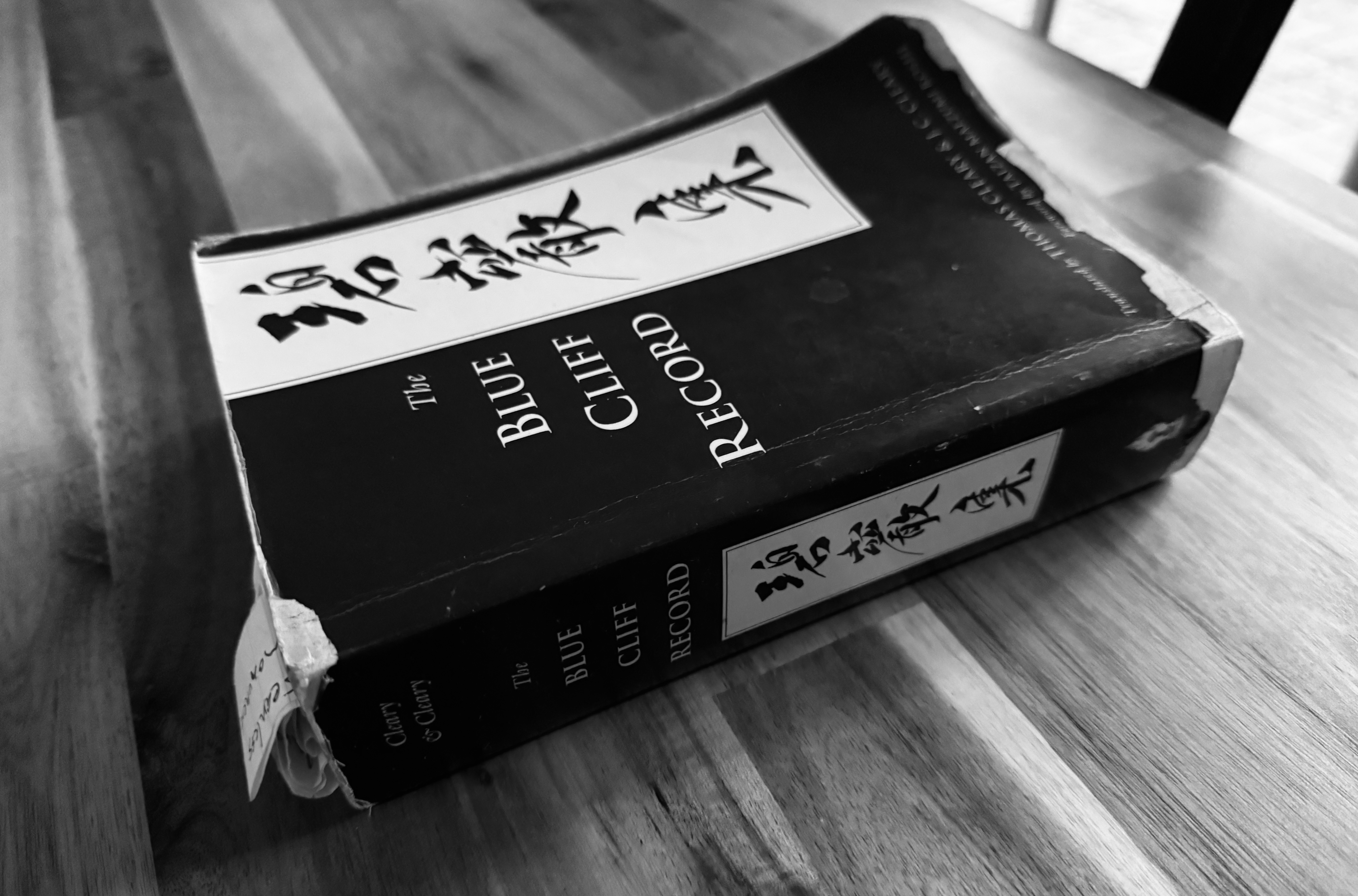
The Blue Cliff Record, translated by Thomas Cleary & J.C. Cleary
Entangling Vines: A Classic Collection of Zen Koans, translated by Thomas Yuho Kirchner
The Record of Empty Hall, compiled by Xutang Zhiyu, translation and commentaries by Dosho Port
Red Thread Zen: humanly entangled in emptiness, Susan Murphy